
SECTOR SIGNAL
2 mins read
2 mins read
2 mins read
-
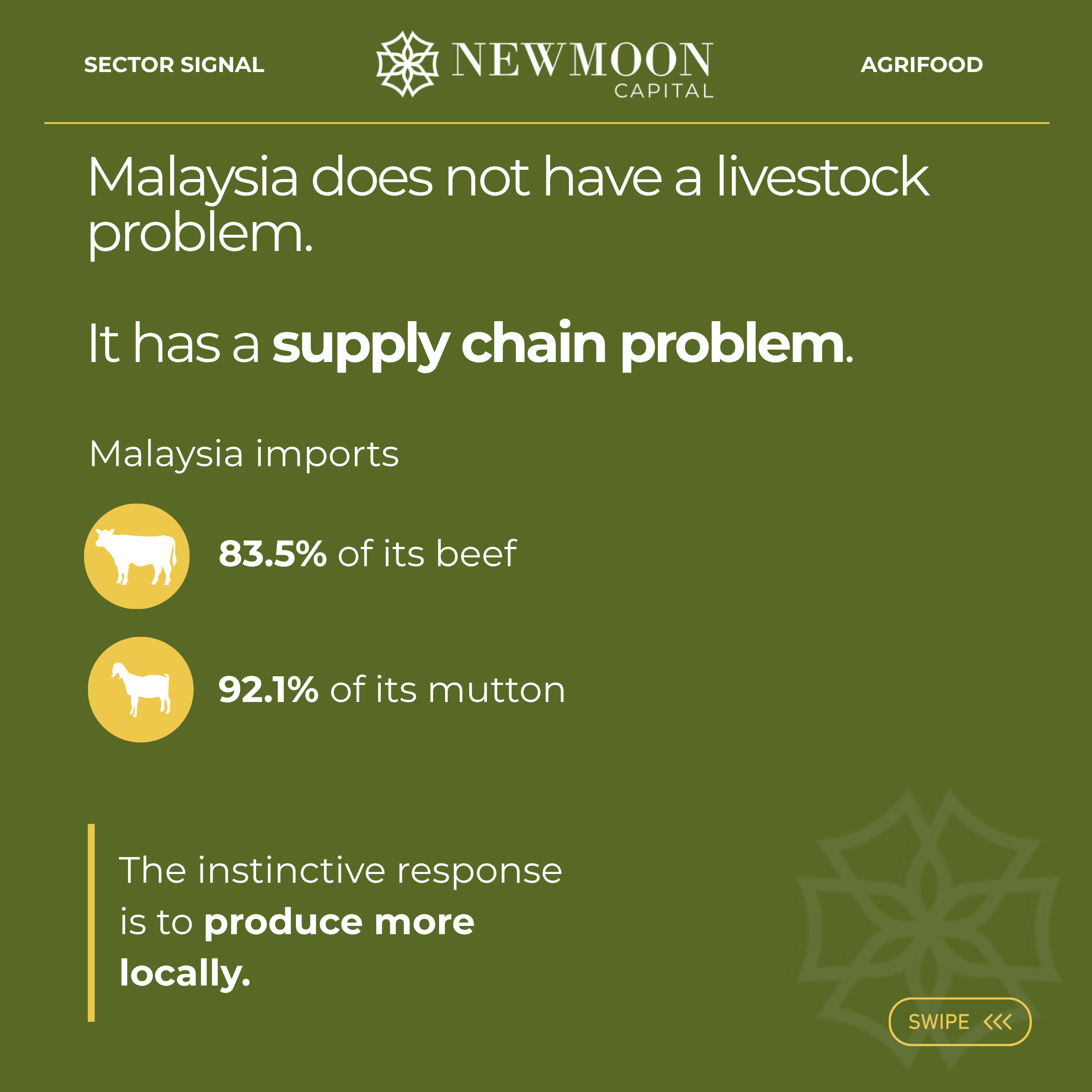
Food security in Malaysia is no longer a slogan. It is becoming legislation.
Over the past year, the conversation has shifted from crisis management to a policy-led rewiring aimed at reducing Malaysia’s RM30bn+ food trade…
2 mins read
-
Malaysia is redefining when formal education begins and the implications go far beyond age eligibility.
The launch of the National Education Blueprint 2026–2035, which allows optional entry into Standard One at age 6..
2 mins read
-
Malaysia’s hospital capacity crunch will not be solved by building more beds.
It can be solved by moving the right care out of inpatient beds. Many elective procedures can be delivered via ambulatory care (outpatient, same-day surgeries) when the…
2 mins read
-
In Malaysia’s E&E sector, growth used to mean adding capacity. That advantage is fading.
Today, customers are underwriting capability, not volume. Managing complexity, meeting tighter tolerances,…
2 mins read
-
Malaysia isn’t just exporting students anymore. It’s importing global degrees.
Malaysia’s higher education sector is evolving into a regional hub for transnational education (TNE). Internationalisation no longer simply means attracting foreign students…
2 mins read
-
When facing a medical procedure, the hardest part isn’t always the diagnosis but it’s the wait and the fear of unknown costs.
This is why the RESET initiative (via MOH, MOF, and BNM) pushing for a Base MHIT plan is critical. The goal is…
2 mins read
-
"Boss, teh ais satu!" And just like that, we're No. 1 in diabetes across ASEAN.
WHO data puts roughly 1 in 5 Malaysians as living with obesity or diabetes, ranking us 2nd in obesity and 1st in diabetes prevalence in the region. The cultural shift is already visible…
2 mins read
-
Malaysia’s employability challenge may not be solved in lecture halls alone.
As the focus shifts from access to outcomes, TVET (Technical and Vocational Education and Training) is re-entering the conversation. Not as an alternative pathway, but as a…
2 mins read
-
Malaysia doesn’t have a drug shortage problem. It has a control problem.
Nearly 40% of essential medicines remain beyond domestic control. Reliance on imported medicines holds when global supply is stable but becomes a risk when disruption hits…
2 mins read
-
Your nasi lemak costs more today. The extra is not going to the hawker.
Much of agrifood operates as a price taker. When costs rise, the pressure flows downstream and margins get squeezed.
But not everyone is affected the same way...2 mins read
-
Teachers today are not short on AI tools.
They are short on the time, training, and trust to use them in the classroom. With tools already in place, attention turns to how teachers are supported, how lessons are designed, and how schools translate tools into better learning outcomes…
2 mins read
-
Malaysia is ageing into a care model it has not built yet.
By 2048, Malaysia is projected to become an aged nation, with those aged 65 and above reaching around 14% of the population. The question is not just whether we have enough…
2 mins read
-
Most food businesses founders think their moat is the recipe. The real moat is reproducibility.
Many food businesses begin with a familiar taste: a family recipe, a secret sauce, or a product customers already know..
2 mins read
-
Most tertiary institutions think their product is education. Today, their real product is employability.
For decades, the implicit promise of higher education was straightforward: study, graduate, and improve your prospects...
2 mins read
-
Patients rarely remember the medical device. Hospitals never forget it.
Most people think healthcare outcomes are driven by doctors and hospitals. In reality, a significant part of healthcare quality depends on suppliers nobody notices. Medical devices…
2 mins read